Utilities Should Not Be Involved in Politics
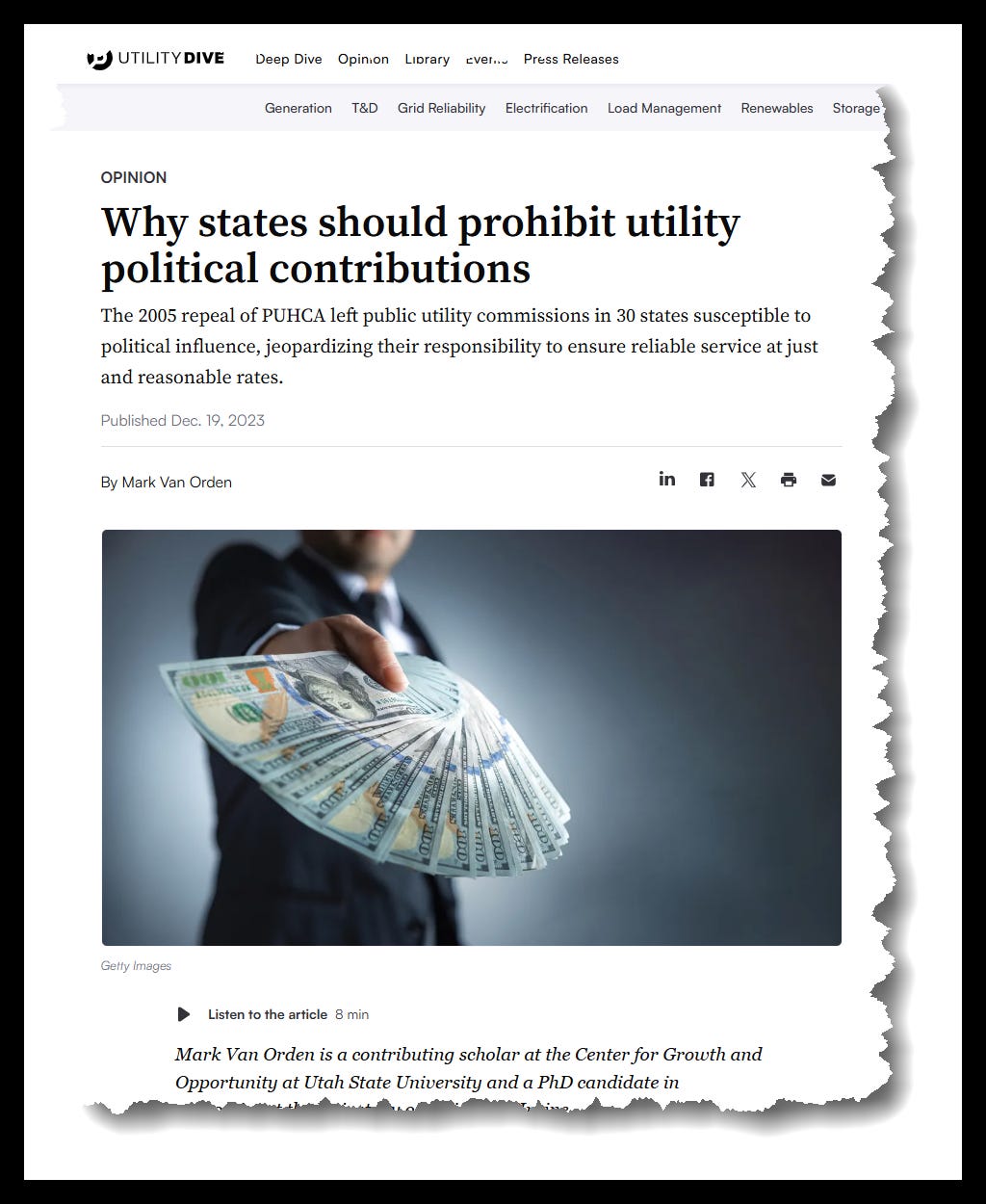
There is a powerful argument gaining traction among policy experts that regulated utilities should be banned from making political contributions altogether. That is not a fringe opinion. It comes from research showing how this practice distorts regulatory outcomes, raises costs for consumers, and undermines the independence of bodies that are supposed to protect the public interest.
A Utility Dive opinion piece argues that the repeal of the Public Utility Holding Company Act of 1935 allowed electric utilities in most states to make political donations that they were previously barred from making. Between 1935 and 2005, utilities could not donate to political campaigns at any level, regardless of state rules. After the repeal, 30 states allowed these contributions and researchers found that utilities increased political giving substantially in those states.
More troubling, the data show that utilities that are permitted to give politically tend to receive higher authorized returns on equity (ROEs) from state regulators. That matters because ROE directly affects utility rates customers pay. Increased contributions were associated with approximately 0.4 percentage points higher ROEs, which translates to millions in additional revenue for utilities at the expense of everyday ratepayers. Utility Dive
This is not about illegal behavior. Utilities acted within the law. The problem is that legal influence becomes economic power, and economic power becomes political leverage. A utility’s core business is regulated. It cannot be reshaped by competition. If the same companies that are guaranteed a return on investment can also fund campaigns and lobby regulators, the whole system tilts in their direction.
Public Utility Commissions are meant to be independent. They are charged with ensuring that services are reliable and rates are just. But when utilities put money into the political process, they buy leverage with legislators and regulators that can affect rate cases, appointments, and legislation. That influence shows up in higher rates and less responsive regulation — outcomes consumers pay for with no transparency.
If you care about transparency, accountability, and fair markets, the conversation about campaign money cannot stop at 501(c)(4) groups or so-called dark money. We have to look at how large regulated industries use their economic clout to shape the political environment that governs them. When a company with a guaranteed customer base also has a campaign checkbook, that should concern every voter.
The simplest legislative solution offered by experts is a prohibition on political contributions by regulated utilities. That is not radical. It would simply prevent entities whose profits are tied to government regulation from using campaign donations to influence the very process that sets their profits.
When regulated utilities have a vested interest in political outcomes, transparency becomes meaningless, because the rules are written by those who benefit from them. That is why this issue deserves as much attention as any other form of opaque campaign spending.
Sources
- Originally published on Substack: https://jeffapierson.substack.com/p/utilities-should-not-be-involved