A Deadline for the Town that said NO!
The Menomonie, Wisconsin, City Council is scheduled to reconsider proposed data center zoning regulations on November 16th 2026.
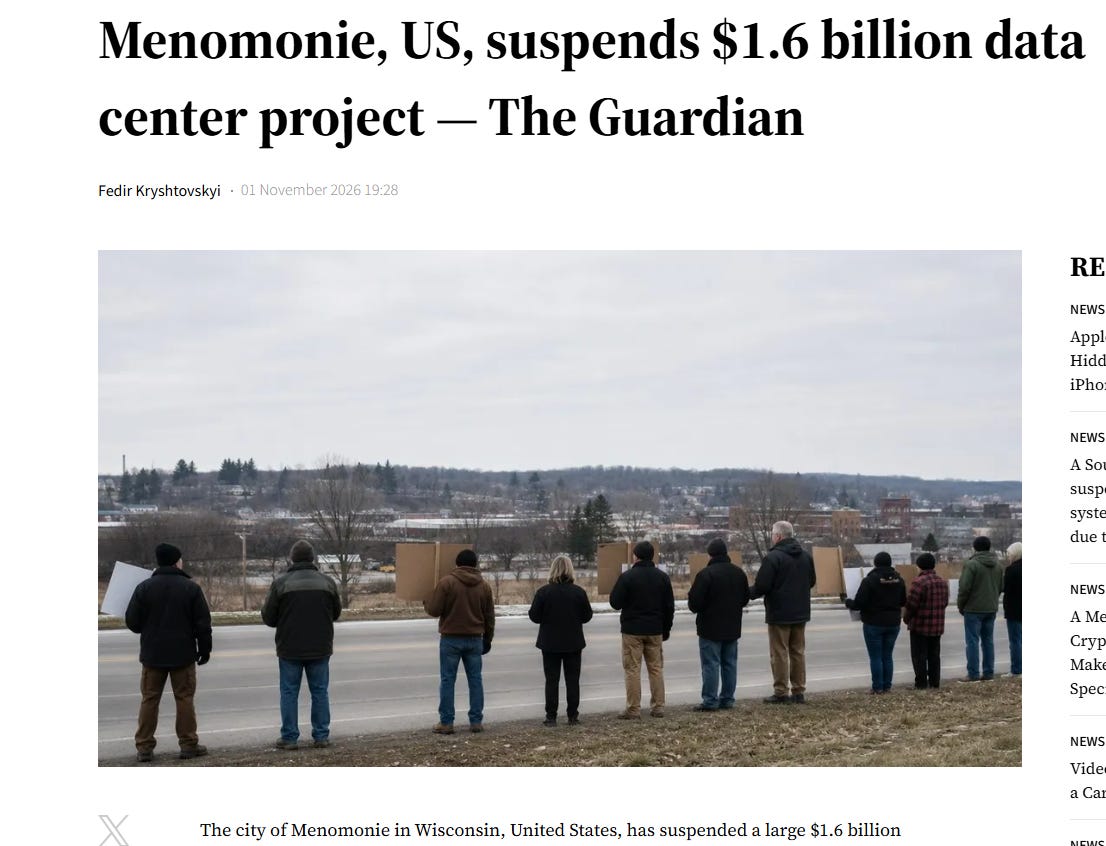
City Council Meeting to Discuss the Data Center Proposal
The City Council’s October 19, 2026, meeting minutes state:
MOTION was made by Luther, seconded by Erdman, and carried unanimously to postpone referral of Proposed Ordinance 2026-13, an Ordinance amending portions of Title 10, Chapter 23 of the City Code regarding the Data Center Industrial (I-4) Zoning District, to the Plan Commission, until the November 16, 2026 City Council meeting.
Residents Stood Up
The residents of Menomonie, Wisconsin, demonstrated something all of us who are facing massive data center proposals should remember. Citizens can make a difference, but they have to pay attention, organize, and show up.
Organizing is the most important part, and it is probably the hardest, at least for me. You can’t do it alone, and you probably can’t do it without looking for allies. Those allies might not agree with you on other important political and policy issues. Get out of your comfort zone.
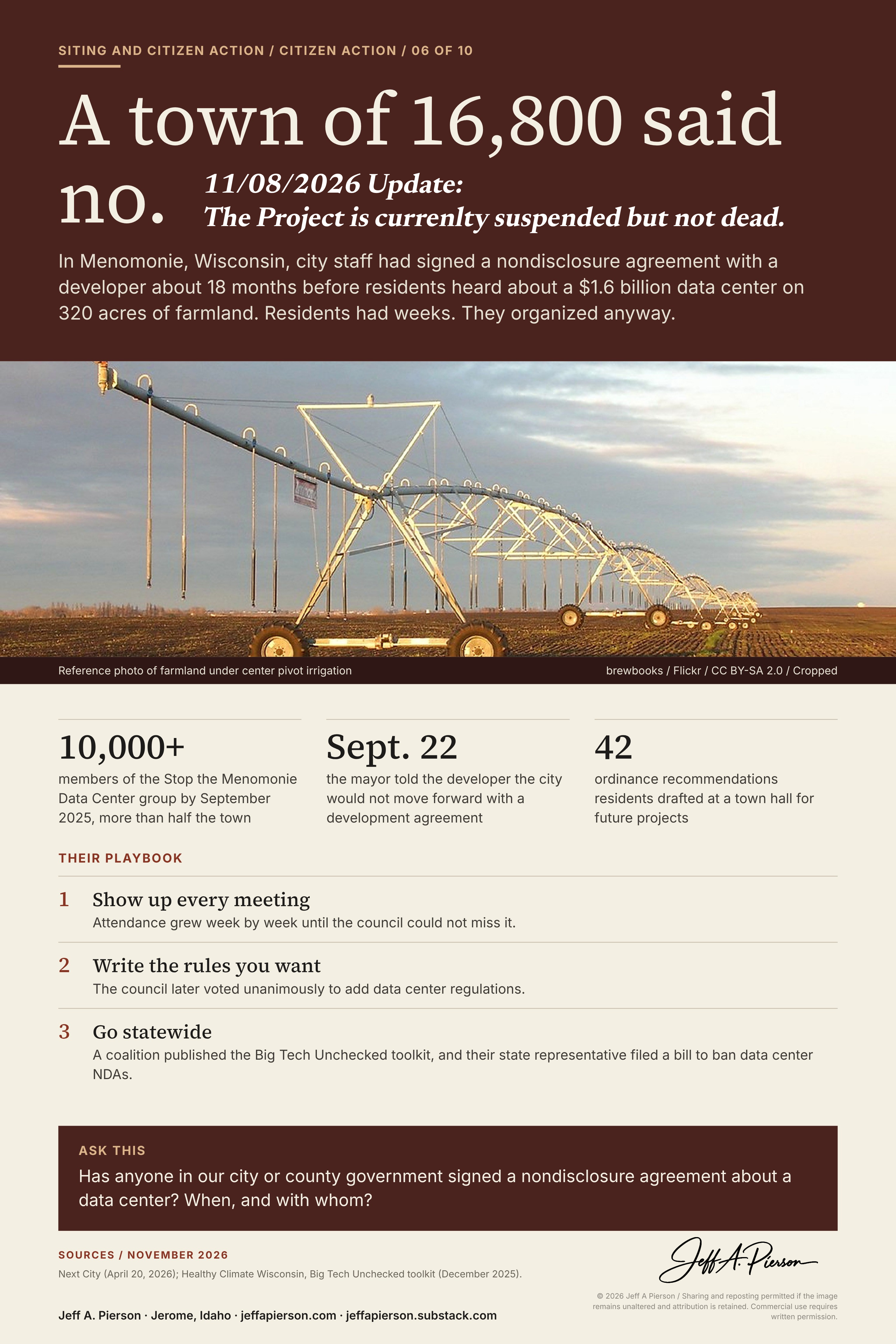
In 2025, a company called Balloonist LLC was pursuing a $1.6 billion data center project on approximately 320 acres. The proposal moved forward under considerable secrecy, including nondisclosure agreements involving city officials.
When residents learned what was happening, they began asking questions about electricity, water, noise, tax incentives, land use, and the long-term consequences for their community.
The timeline, what happened.
July and August 2025: The project moved through the local annexation and rezoning process. While the public was opposed to the project, the City Council approved rezoning by an 8-3 vote.
September 2025: Following growing public pressure, Mayor Randy Knaack announced that the city would no longer pursue a development agreement. The city also stopped working on the tax increment financing district for the project.
January 2026: Menomonie officials established a zoning district for data centers, creating additional requirements.
June 2026: The developer was still interested and Balloonist LLC contacted city officials seeking meetings about the project. Mayor Matthew Crowe, wisely declined to meet until the city completed its zoning regulations.
October 2026: Residents have continued demanding protections related to water consumption, noise, setbacks, building size, and other impacts.
November 2026: The project remains suspended, not permanently canceled. The developer still owns the property, and future applications remain possible. The City Council postponed further consideration of its proposed zoning amendments until November 16, 2026.
How Things Normally Go
By the time most people learn that a hyperscale or industrial project is planned near their homes, farmland, or community, agreements may already have been signed, and planning may be well underway.
After agreements are in place, the next steps may include zoning, infrastructure commitments, and negotiating financial incentives with local and state governments. Every agreement and every commitment makes stopping the project harder. Communities need to be involved BEFORE the decisions are made, not after construction begins.
Pay Attention
Read the agendas, examine the applications, demand financial transparency from cities and counties, and learn how the process works. Ask about water, electricity, natural gas, emergency services, tax incentives, and the long-term costs. Insist on zoning protections, and do not settle for promises from developers.
Show Up
Whether you are organized or not, SHOW UP AT THE MEETINGS.
Personally, I am not opposed to all data centers. What I am opposed to communities giving up control over their land, resources, culture, and future because somebody promises jobs and economic development. You will learn to hate the phrase “economic development” because of the way it is used to justify everything the developers want.
Menomonie hasn’t won the fight, not yet anyway. Its residents have demonstrated that an organized community can force elected officials to listen. If you don’t participate in the decisions that shape your community, somebody else will make those decisions for you, and you may not like the results.
Source:
The Guardian, November 1, 2026. https://www.theguardian.com/us-news/ng-interactive/2026/nov/01/wisconsin-city-menomie-meta-datacenter
Disclaimer: Where I Stand!
Not all data centers are bad, and some really are necessary. Many data centers and AI tools do important work supporting hospitals, emergency services, banking, research, and the technology we all use every day.
I am not against data centers, but I am against putting them in the wrong places, wasting valuable resources, and sticking local communities with the costs while somebody else walks away with the profits.
We need to understand the differences between data centers, what they actually do, and whether the benefits outweigh the costs.
Some data centers aren’t good for you or your community. Some are used for mass surveillance, collecting marketing information, and crypto mining. Crypto mining is not necessarily bad, but often the profits leave the area, and the local community ends up with the bill.
There is nothing wrong with progress, but it needs to make sense for the people who have to live with it.
© Copyright 2026, Jeff A Pierson, JeffAPierson.com
Sources
- Originally published on Substack: https://jeffapierson.substack.com/p/a-deadline-for-the-town-that-said