The Hidden Driver of Your Power Bill
AI’s Appetite, CAISO’s! Big Tech’s hunger for electricity threatens to turn Idaho’s hydro into someone else’s profit. The question is simple: who owns the light that keepsrices, and Idaho’s Future
This analysis draws on a segment from The Glenn Beck Program aired on October 29, 2025, titled “The Hidden Culprit Behind Rising Electric Bills.”

Idaho’s cheap hydro power built one of the most stable energy systems in the nation. But that foundation is now being quietly consumed by a digital gold rush. Massive new AI and cloud computing campuses, run by Microsoft, Amazon, Google, and Meta, are devouring electricity faster than utilities can build new supply. Every teraflop they compute draws power from the same grid that heats Idaho’s homes and irrigates its fields.
The result is already visible: higher rates, tighter reserves, and the growing risk that Idaho’s locally owned energy will be traded away in regional markets to cover someone else’s shortage.
On October 29, 2025, The Glenn Beck Program aired a segment titled “The Hidden Culprit Behind Rising Electric Bills.” Beck argued that Americans’ power bills are climbing even as other costs level off because AI and data center demand is exploding worldwide. He cited the International Energy Agency’s 2024 Energy and AI report, which projects that electricity use from data centers and AI workloads could double between 2022 and 2026, a growth equivalent to adding another Japan’s worth of demand.
His warning was simple: if Big Tech wants AI, cloud, and automation, it should build or contract its own power plants instead of draining public grids already strained by transition policies. Otherwise, ordinary ratepayers will carry the cost through higher bills, blackouts, and the slow loss of local control.
That warning lands squarely at Idaho’s doorstep. This analysis applies Beck’s argument to Idaho’s energy crossroads, where low-cost hydro, expanding data infrastructure, and regional market integration are converging in ways that threaten the state’s independence. The lessons from Northern Virginia and Moses Lake, Washington, show what happens when hydro-based communities let industrial load outrun local supply. Idaho is next in line.
Related: Why Idahoans Are Paying More for Their Power Bills, by Representative David Leavitt, District 25
Electric bills continue to rise even as fuel and grocery prices stabilize because a new class of industrial load is coming online at unprecedented speed. AI data centers, cloud campuses, and compute-intensive facilities are absorbing firm electricity faster than utilities can add dispatchable supply. Planners in PJM and other regional grids warn of critically tight capacity and possible conservation orders or rolling outages.
Beck’s proposal that Big Tech secure dedicated firm power instead of relying on public supply echoes what state commissions in Virginia, Maryland, and Pennsylvania have already begun debating. By the end of 2026, according to multiple grid planners, the cost and reliability strain from compute growth will be impossible to ignore.
The IEA estimates that total data center electricity demand could exceed one trillion kilowatt-hours a year by 2030, with AI workloads growing four times faster than overall electricity demand. That is not a rounding error; it is a structural new load that must be met with power plants capable of running when needed.

Regional stress is already visible. Analysts in PJM states estimate that meeting projected compute demand could require over 100 billion dollars in new capacity investment. Governors in Pennsylvania, Maryland, New Jersey, and Virginia have suggested that large-scale data center developers secure firm generation rather than depend on capacity intended for the public. When elected officials start talking about pushing hyperscale users off the common grid, the strain is real.
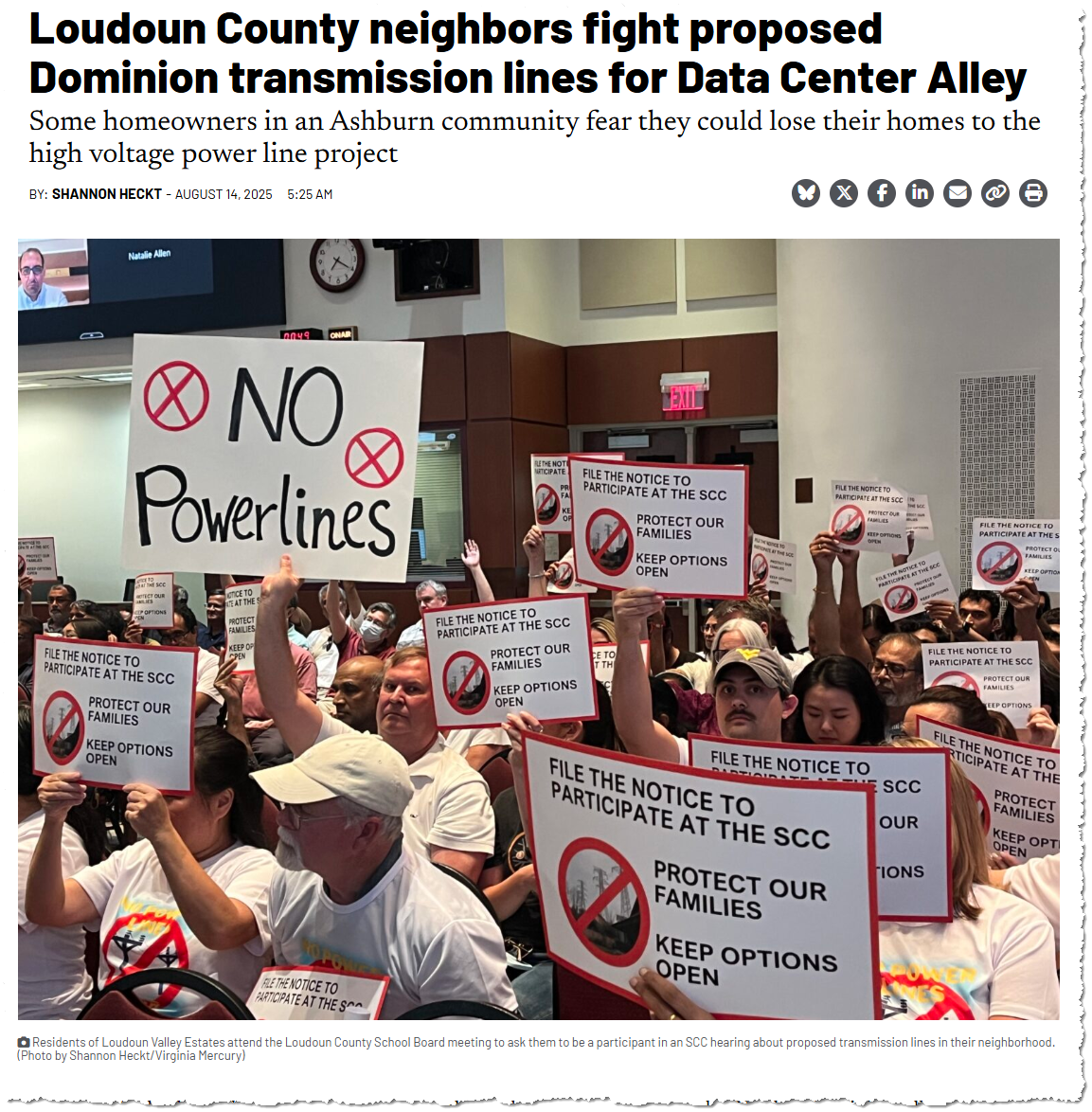
Virginia illustrates what Idaho must avoid. Northern Virginia hosts the world’s largest concentration of data centers. That sector now accounts for roughly a quarter of Dominion Energy’s total load, reshaping the state’s resource mix and prompting community opposition to new transmission lines.
Closer to home, Moses Lake and Grant County, Washington, offer a clear warning for every hydro-rich community in the inland Northwest. Grant PUD began limiting new data center hookups in 2024 after requests exceeded its hydro and transmission capacity. Cheap hydro attracted the boom; scarcity forced the brakes. This is the sequence Idaho will face if policy treats hyperscale electricity as an entitlement rather than a negotiated privilege.

Idaho’s Energy Crossroads
Idaho’s power system rests on legacy hydro: low cost, carbon light, and locally controlled. Yet those resources are finite and seasonally variable. The strategic risk is clear. If Idaho integrates more tightly into CAISO’s Extended Day-Ahead Market while the West adds massive intermittent renewables and AI-driven demand, our hydro becomes a liquidity source for someone else’s shortage.
During market peaks, CAISO prices surge. Traders benefit, but Idaho customers face market-indexed replacement costs or curtailments. CAISO’s own market monitoring reports document how scarcity pricing and wheeling transactions spike during tight hours. Combine that with the expected surge in AI load and it becomes clear why families worry about exporting reliability while importing volatility.
Related: FERC Approves Incentives, Tariff for SWIP-North
Idaho’s vulnerability is not hypothetical. In 2024, the Idaho Public Utilities Commission approved a 4.2 percent rate increase (case IPC-E-24-06), citing higher wholesale market and purchased power costs. Those increases came before the current wave of AI expansion. If Idaho’s low-cost hydro is exported to cover regional shortfalls, residents will bear the financial consequences through higher retail rates and reduced reliability.
The Market Architecture Problem
AISO’s Extended Day-Ahead Market (EDAM) and the Southwest Power Pool’s Markets+ are reshaping Western trade flows by coordinating day-ahead scheduling and pricing. Areas with spare dispatchable capacity, such as hydro in Idaho and the Northwest or thermal units in the interior, often export into markets with higher renewable shares and steeper evening ramps because marginal prices are highest there. That dynamic helps during emergencies, but it becomes unsustainable if it hardens into an expectation that interior hydro will permanently balance coastal policy. Idaho should not underwrite that bet by default.
Hydro versus CAISO in plain terms: Idaho’s legacy hydro has among the lowest operating costs in the region once maintenance, fish and wildlife obligations, and capital refresh are included. Those units deliver stable, predictable energy. CAISO’s markets, by contrast, are marginal cost systems. In normal hours prices can be low, but in stressed hours the marginal generator, usually natural gas, sets high scarcity prices. The more Idaho depends on those markets for exports or backfill, the greater the exposure to external volatility and California’s policy-driven price swings.
Idaho Power’s planning posture: The utility’s 2023 Integrated Resource Plan projects continued reliance on wholesale market purchases to cover certain seasons and hours while new storage, demand response, and renewable projects develop. That strategy is defensible in moderation but risky as electrification and data center growth accelerate faster than firm supply additions. Sending more low-cost hydro out of state and buying back marginal priced energy during tight periods would raise retail rates. Planning must start from a different premise: protect Idahoans first, then negotiate exports under explicit reliability and price conditions.
Policy Recommendations
Protect local service first. Adopt a service priority rule that guarantees Idaho households and employers first claim on in-state hydro and firm resources before any voluntary exports.
Require self-supplied power. Condition large compute or data center interconnections on proof of firm generation or dedicated contracts that do not displace existing ratepayer supply.
Create automatic safeguards. Implement congestion and scarcity triggers that temporarily suspend elective exports when the regional grid is tight.
Preserve hydro as a reserve. Designate legacy hydro as a strategic reserve during drought or extreme market conditions, ensuring dispatch only after in-state needs are met.
Mandate transparency. Require public disclosure of any arrangement linking Idaho’s hydro or transmission assets to external market operators. No deal should proceed without demonstrated ratepayer benefit under worst case conditions.
Bottom-line
Beck’s broadcast was polemic, but the concern behind it is valid. The compute boom is reshaping energy markets and will accelerate through the next decade. The clash between aggressive renewable mandates and the physical limits of firm supply is not theoretical; it is already visible.
Where the argument must be sharpened is in sovereignty. The people of Idaho should not become involuntary investors in other states’ energy policies or in the infrastructure of global corporations. Idaho can support innovation without surrendering control of its grid, but only if it establishes firm, transparent rules now, before scarcity habits take hold.
Author’s Note
At the heart of every debate over energy production lies an ethical question: who bears the cost, and who decides? The real issue is not only technology or markets but moral stewardship of land, power, and representation. Energy policy determines how communities live, work, and sustain themselves. When ratepayers fund the system, they are not investors in an abstraction; they are citizens with a right to honest representation.
The ethics of energy and land use begin with that principle. A just system values transparency, local control, and accountability to those who pay the bills and live beside the infrastructure. Idaho’s hydro resources and open landscapes are not commodities to be traded away. They are public inheritances that must be managed with consent, integrity, and foresight.
References
International Energy Agency. Electricity 2024: Analysis and Forecasts to 2026.
U.S. Energy Information Administration. Virginia Energy Profile (2025).
PJM Interconnection. Capacity Outlook 2025–2030.
Pew Research Center. Data Center Energy Use in the Mid-Atlantic Region (2025).
Grant County Public Utility District. Data Center Load Management Report (2024).
CAISO Department of Market Monitoring. Quarterly Market Performance Report (2025).
Western Energy Imbalance Market. Extended Day-Ahead Market Overview (2025).
Idaho Power. Integrated Resource Plan (2025).
Idaho Public Utilities Commission. Order No. 35721: Electric Rate Adjustment (2024).
Source note: Primary broadcast material taken from The Glenn Beck Program, October 29, 2025, episode titled “The Hidden Culprit Behind Rising Electric Bills.”
© 2025 Jeff A Pierson
#IdahoPower#CAISO#EnergyPolicy#AIEnergy#Hydroelectric#DataCenters#EnergySovereignty#GridReliability#IdahoPolitics#Infrastructure#MosesLake#EnergyCrisis#PublicUtilities#ElectricRates#RenewableEnergy
Sources
- Originally published on Substack: https://jeffapierson.substack.com/p/the-hidden-driver-of-your-power-bill